

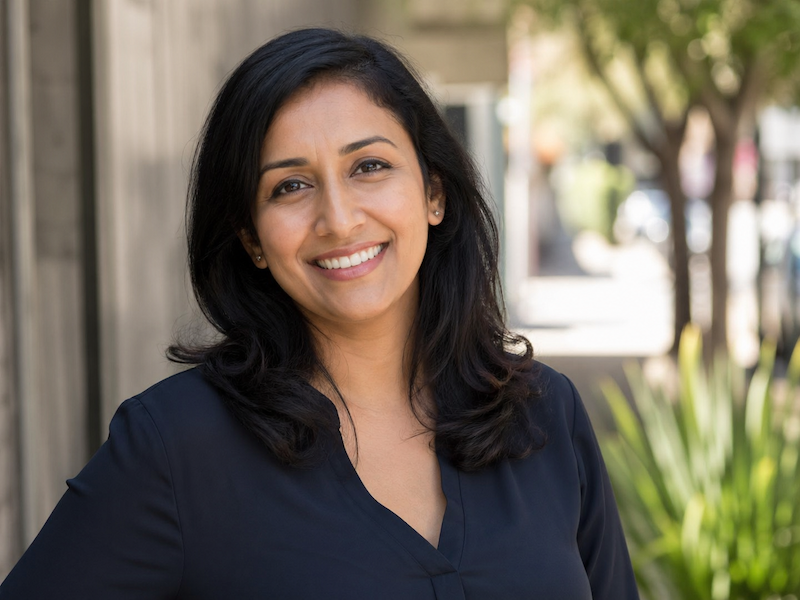
Harus came to EduviXor at a difficult turning point. She had already completed a college program in the United States and had made a bold decision to change careers. Back home in the UAE, she had experience as a marketing manager. But instead of staying in a familiar path, she wanted to rebuild herself as a software developer in the United States.
To make that change possible, she completed a two-year software developer diploma program in the USA. On paper, it looked like she had done the right thing. She had studied the field. She had completed the program. She had some small projects. She had the motivation. But after graduation, she could not find a related job in the city where she was living.
That was when she came to EduviXor for help.
When Harus first approached us, she was frustrated.
She had already spent time and money on a software development diploma, but the result she expected had not happened. She was applying for jobs, but the responses were limited. The longer the job search went on, the harder it became to stay confident. It has been 6 months since she graduated but there was no interview in line.
At first, she thought the problem was simply her resume. But when we reviewed her full profile, we realized the issue was bigger. Her past projects were not being used properly. Some of her work existed, but it was not clearly organized on GitHub. Her LinkedIn profile did not tell a strong story about her career transition. Her personal website was underdeveloped and did not show enough proof of her ability as a developer.
Most importantly, during the six months she spent looking for jobs, she had not used that waiting period to keep upgrading her technical skills. This is very common for career changers.
Many students believe that once they finish a diploma, the next step should naturally be a job. But in a competitive field like software development, the diploma is only one part of the story. Employers want to see proof. They want to see projects. They want to see continued learning. They want to understand what kind of developer the candidate is becoming.
Harus had the foundation, but she had not yet packaged her story in a way that employers could trust.
We started by changing the way Harus looked at her job search. Instead of treating herself as “a graduate waiting to be hired,” we encouraged her to see herself as a developer who needed to keep building, improving, and showing her work.
The first area we worked on was her portfolio.

We reviewed her past projects and helped her identify which ones could be strengthened, cleaned up and presented more professionally. We encouraged her to organize her GitHub so that it was easier for employers to understand what she had built, what tools she used and what problems each project solved.
Then we looked at her LinkedIn profile. Harus had a unique background. She was not just a new software graduate. She had business experience. She had worked as a marketing manager. She understood users, communication, market needs, and business goals. Instead of hiding her previous career, we helped her connect it to her new direction.
Her story became stronger when we positioned her as someone who could bring both technical training and business thinking into software development. We also worked on her personal website.
Her existing website did not yet support her job search. It needed a clearer structure, stronger project presentation, a more confident introduction, and a better way to guide recruiters through her work. We helped her understand that a personal website should should answer one question quickly: “Why should someone interview this candidate?”
Next, we supported her resume and cover letter. We helped her rewrite her resume so it focused less on listing responsibilities and more on showing relevant skills, projects, tools, and outcomes. For her cover letter, we helped her explain her career transition in a way that felt intentional rather than uncertain. We also encouraged her to keep learning.
Since she had already spent six months looking for work, we helped her see that this time could still become productive. We recommended additional third-party courses, including free and affordable options, so she could continue upgrading her developer skills while applying for jobs. This helped her close the gap between graduation and employability.
Finally, we encouraged her to widen her job search.
At first, Harus was focused mainly on finding a job in her city. But the software field is not limited by one location. We helped her think more globally and consider remote opportunities, especially roles where she could work for a US company while living somewhere with a lower cost of living.
This shifted the entire strategy. Instead of competing only in one local job market, she could position herself for remote work and build a more flexible life.
Harus eventually secured a remote software developer role with a US company. This was the breakthrough she needed.
The role allowed her to return to the Middle East while still being paid in USD. It gave her the best of both worlds: international career growth, lower living costs, and the flexibility to live closer to her home region. For Harus, the final result was not just about finding a job. It was about finally making her career transition real.
She moved from marketing management to software development. She moved from local job frustration to global job strategy. She moved from an underdeveloped portfolio to a stronger professional identity.
Today, Harus is deeply grateful for the support she received from EduviXor. Since then, she has referred several friends who needed help with academic planning, career direction, resume strategy, and life transitions. Her story is a reminder that completing a program is not always enough.
Sometimes the missing piece is not another diploma. It is how you present your work, how you continue learning, how you tell your story and how wide you are willing to search for opportunity.
“Jenkin, the consultant took the time to understand my background, experiences, and career goals. They helped me reframe my past projects and internship experience in a way that aligned with what top employers are really looking for in a software developer...” - Harus
Trying to change careers but not getting interviews after graduation? EduviXor can help you review your resume, portfolio and job search strategy so your next step becomes clearer and more realistic.












.svg)

