

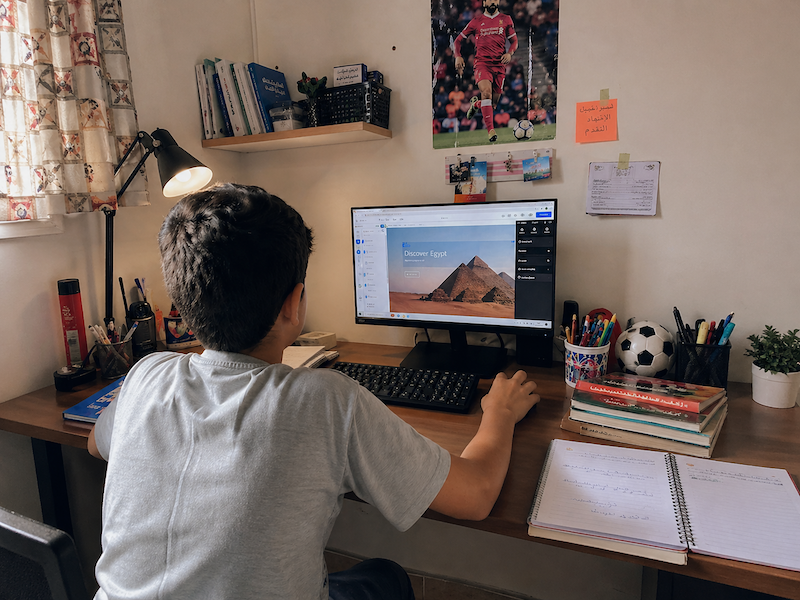
Ali is a 10-year-old student who, like many children his age, spent most of his after-school time on screens.
From his parents’ point of view, it looked like gaming, videos, and social media were taking over his free time. They were worried because they did not fully understand what he was watching, what he was interested in, or whether screen time was slowly replacing more meaningful learning.
For the Future Builder stage, our goal is about helping parents observe the child’s real interests, understand their strengths and create a balanced development environment without over-programming or forcing too many classes. EduviXor’s Future Builder framework focuses on strengths, interests, self-regulation, time use, curiosity, habits, and early exposure.
For Ali, the real question became: What if his screen time was not just a problem to remove, but a clue to something he cared about?
.webp)
Before coming to EduviXor, Ali’s parents felt unsure about how to manage his screen time. After school, Ali often went straight to gaming, videos, or online content. To his parents, it looked like distraction. They worried that he was spending too much time consuming content without building anything useful from it.
They also felt they did not really know his dreams. When they asked him what he liked, the answer often sounded simple: games. But “games” can mean many different things. Some children enjoy the competition. Some enjoy storytelling. Some enjoy design. Some enjoy watching other gamers explain strategies. Some are fascinated by graphics, characters, worlds, or how digital communities are built.
Ali’s parents wanted him to spend less time passively scrolling or playing, but they did not want to crush the one area where he showed genuine excitement. They needed help translating his interest into something healthier, more creative, and more structured.
We started by talking to Ali directly. Instead of only asking the parents what they were worried about, we spent time understanding what Ali actually enjoyed. We asked what games he liked, what kind of gaming videos he watched, what creators he followed, what he found interesting on social media, and what he would create if he had the chance.
That conversation changed everything. We realized that Ali was not only interested in playing games. He was also interested in designing and sharing gaming experiences. He liked the idea of building something around gaming, especially a website where he could post his thoughts, organize his videos, and share what he was learning.
So we helped the family reframe the situation. Our goal was to turn part of Ali’s screen time into a project. We encouraged Ali to start a small gaming website.
This gave him a clear outlet. Instead of spending all his time on gaming or social media, he could use his interest to build something of his own. The website became a place where he could share gaming experiences, write simple posts, upload videos, organize content, and slowly learn how digital platforms work. We also suggested a healthier content routine.
Since his parents were uncomfortable with too much time on social media, we encouraged Ali to spend more time creating videos for his own website instead of only posting or scrolling on social platforms. This gave him a safer, more controlled place to practise content creation. From there, we introduced a small layer of marketing.
Ali also joined our private sessions of "AI Applications for Young Entrepreneurs" to build skills on running a small business and building his own portfolio.
.png)
Ali did not need to become a marketer at age 10. But he could begin learning simple questions:
1. Who would want to watch this video?
2. Why would someone visit my website?
3. What makes one gaming tip helpful?
4. How do I make the title clear so people can find my website?
5. How can I make the website easier to use?
These questions helped Ali see that games were not only entertainment. They could connect to design, communication, storytelling, audience building, and even small venture thinking.
This is what Future Builder planning is about, by giving them a small structure to explore what they already care about.

Ali’s family has already seen a meaningful change.
Instead of spending most of his free time only playing games, Ali has started spending more time designing and maintaining his website. He is thinking about what to post, how to organize his videos, and how to make the website better.
For his parents, this was a turning point. They no longer saw his gaming interest only as wasted screen time. They began to see it as a window into his creativity.
For Ali, the project gave him something that school alone could not always provide: ownership. He had his own website. His own ideas. His own small project to improve.
Now, EduviXor is continuing to work with Ali on more projects connected to gaming, graphic design, digital creativity, and simple venture-building. The goal is to help him focus on something he truly enjoys outside of school, while slowly building better habits around technology.
Ali’s story is a reminder that screen time is not always one simple problem.
Sometimes, hidden inside is a child’s interest, imagination, and early sense of identity. With the right guidance, that interest can become a project. And with the right project, a child can begin to move from passive consumption to active creation.
“EduviXor's consultation has inspired us to allocate time for him to work on his passion project and run as a small venture. Jenkin helped us see Ali’s screen time differently. Instead of only fighting over games and social media, we learned how to turn his interest into a meaningful project where he could create, design, and share his ideas.” - Ali’s Family
Is your child spending too much time on screens, gaming or online videos? EduviXor can help your family uncover what they are truly interested in and turn that interest into a balanced, creative, future-ready project.














.svg)

