
Diploma or degree? Compare duration, cost, career outcomes, transfer pathways and PR implications to find the right path for your future.

.webp)
Choosing between a diploma and a degree is one of the most consequential decisions you will make as an international student. Both qualifications open doors. But they open different doors, at different speeds, at different costs.
This guide breaks down what matters most. Duration. Cost. Career outcomes. Transfer pathways. And how your credential level affects your chances of permanent residency.
Diplomas typically take one to two years to complete. Degrees take three to four years. That gap matters for both your budget and your timeline.
Total diploma spend is typically lower because of the shorter duration. Two years at AUD 20,000 is very different from four years at AUD 35,000.
Living costs add another layer. Four years of rent, food, and transport adds up to a significant sum. Always factor total cost of living into your comparison.
.webp)
The honest answer is: it depends on your industry and your goals.
Diplomas are designed for practical, job-ready skills. Graduates can enter the workforce quickly. Industries that value diplomas include:
Diploma graduates are trained for hands-on work. Employers in these sectors often value that directly.
Some professions require a degree by law or by industry standard. There is no workaround in these fields:
Beyond regulated professions, degree holders often have stronger long-term earning potential. Management roles, research positions, and senior leadership tend to favour candidates with a bachelor's degree or higher.
Many degree holders work in roles that do not require a degree. Many diploma holders build rewarding, well-paid careers. The credential is one factor. Your experience, skills, and network matter too.
A diploma does not have to be your final destination. Across Australia, Canada, and the UK, universities have formal credit recognition arrangements with diploma-granting institutions.
Australian universities follow national credit transfer guidelines. A completed diploma in a related field can earn you up to 33% credit toward a three-year bachelor's degree. An advanced diploma can earn up to 50% credit. This means you could enter a degree in second year and finish in two years rather than three.
Griffith University, RMIT, and the University of Newcastle all have published articulation agreements for this purpose. Many other universities offer similar arrangements.
Canadian college graduates with a three-year advanced diploma can often complete a bachelor's degree in Australia, Ireland, or the UK in as little as one year. Two-year diploma holders typically need one additional year and a half to complete a related degree. Within Canada, many universities have bilateral agreements with colleges allowing credit transfer toward a related degree program.
Continue Reading -Studying in Canada 2027: Costs and PR Pathways
UK universities regularly accept credit transfers for business, IT, and engineering programs. Students entering with a relevant diploma often join in the second year of a three-year degree program. Always confirm with the specific university before assuming credit will be granted.
Continue Reading - Studying in the UK in 2027: Costs and Pathways
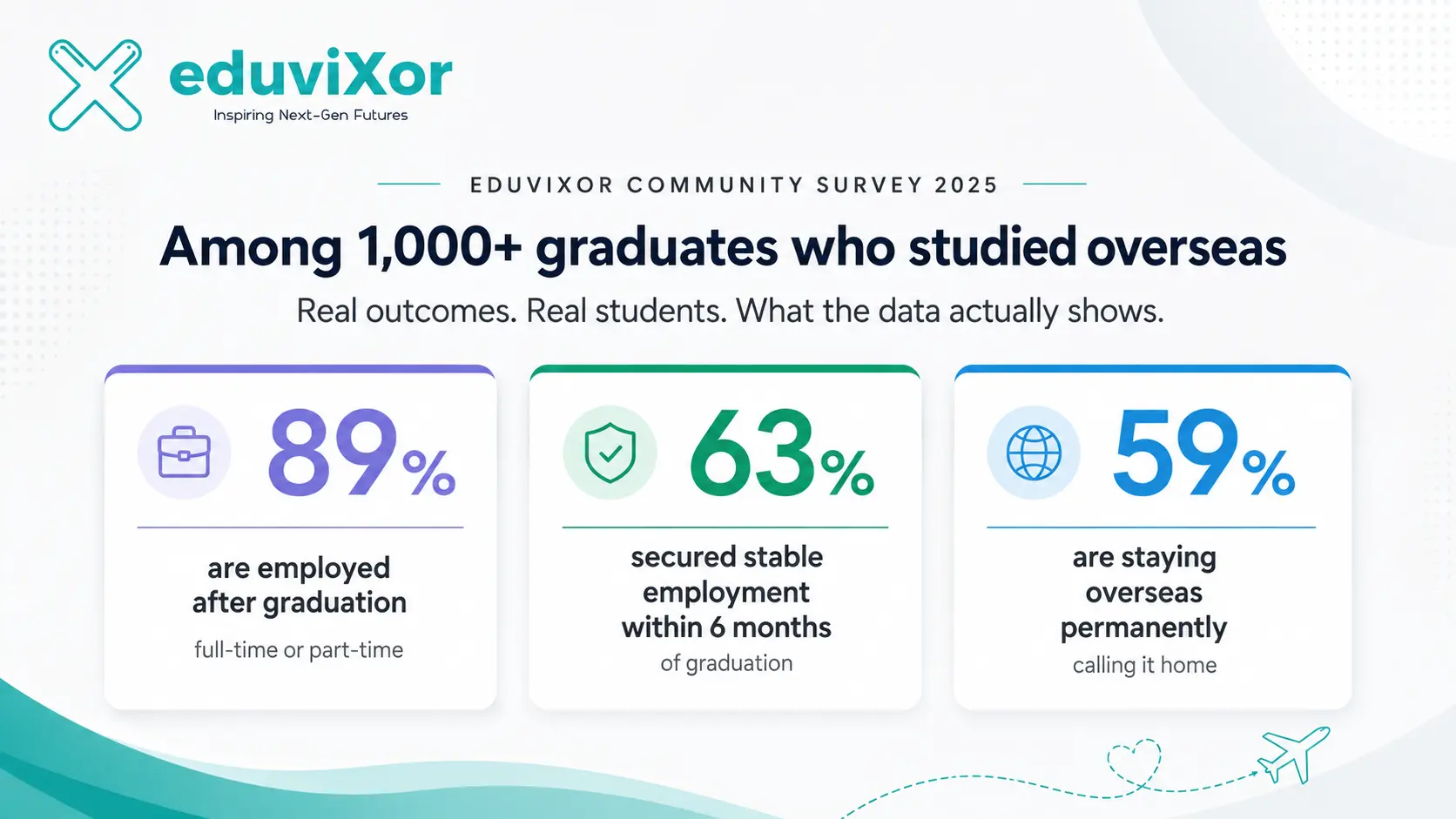
For international students with permanent residency on the horizon, the answer is yes. Credential level can directly affect your points score or your pathway eligibility.
Australia's skilled migration system (Subclass 189, 190, and 491 visas) uses a points test. Education qualifications contribute directly to your score:
The minimum score to lodge an Expression of Interest is 65 points. In competitive occupations, you often need 75 to 85 or more to receive an invitation. A diploma earns you 5 fewer education points than a degree. In a competitive pool, that gap matters.
Your skills assessment body (ACS for ICT occupations, VETASSESS for many others) will also evaluate whether your qualification meets Australian standards for your nominated occupation. A diploma satisfies the requirement for some occupations. For others, a degree is necessary.
Canada's Express Entry Comprehensive Ranking System (CRS) awards education points as follow:
A one-year diploma earns 30 fewer CRS points than a bachelor's degree. In Express Entry draws, even a small points gap can mean a significant difference in wait time. That said, a two-year Canadian college diploma qualifies for Express Entry through several pathways. Many students have successfully obtained PR through the college route.
The UK Graduate Route visa allows international students to stay and work after completing their studies. But it requires a full bachelor's degree, master's degree, or PhD. A postgraduate diploma does qualify. Students who complete a diploma program at a further education college cannot apply for the Graduate Route visa. This is a critical distinction for those planning to stay and build work experience in the UK post-graduation.
From January 2027, the Graduate Route will be reduced from two years to 18 months for bachelor's and master's graduates. PhD holders retain three years. Planning your UK pathway early has become even more important.
Stella, EduviXor's AI advisor, can help you map out your options as a first step. She is a starting point. Our consultants dig into your specific situation, goals, and circumstances in ways that no AI tool can replicate.
.webp)
.webp)
.webp)
.png)
.webp)
.png)
.png)
.webp)
.webp)
.webp)


.webp)
.webp)
.webp)

.webp)
.webp)